
798 District Blog | 2010 | September | 09
THE art platform for art lovers

798 District Blog


Archive for September 9th, 2010


ArtTactic’s Chinese Contemporary Art Market Confidence Survey Shows Continued Strong Recovery 0

Posted on September 09, 2010 by admin

NEW YORK, NY.- This week, ArtTactic released its newest Chinese contemporary art market confidence survey, which — as expected, considering the success of this spring’s auctions in Hong Kong and mainland China — shows a 27% positive increase in confidence over December 2009, with a majority of respondents believing either that the Chinese contemporary art market has rebounded or will do so within one year.

Over the past 18 months, the emergence of the mainland Chinese auction house as a strong regional force and the growing clout of new Chinese collectors has injected a serious dose of optimism into the market, and led ArtTactic to conclude that the current trend sets out the possibility that Chinese contemporary art volume in 2010 might even come close to pre-crisis historical levels.

Highlights of ArtTactic’s latest report:

• 71% of respondents believe the market has already rebounded (35%) or will do so within one year (36%). This is significantly higher than in December 2009, when only 22% of respondents said they thought the market would rebound within a year or earlier.

• The 27% positive increase in the Chinese contemporary art confidence indicator is driven by substantially better Hong Kong and mainland Chinese auction results in the first half of 2010, as well as pick-up in primary market activity.

• 53% of respondents believe the market will go up over the next 6 months, 39% belive it will level out, and 8% believe the market will fall.

• The Confidence Indicator (which now sits at 73) suggests that a significant amount of optimism has re-entered the Chinese art market, and the primary driver for the Chinese contemporary art market going forward will be economic growth.

• The lower end of the Chinese contemporary art market (works priced below US$50,000) has the highest market confidence, although the top end (works above $1 million) shows more positive than negative sentiment — reflected in the success of blue-chip artists in this year’s spring auctions.

• The speed of the recovery in the Chinese contemporary art market has accelerated in the first half of 2010.

• The strong growth in the domestic auction house volume suggests that market share is shifting away from Hong Kong towards the Mainland. Last year showed the strength of the domestic collector base and the ability of domestic auction houses to attract top quality consignments.

• Top 10 prices reveal the difference between domestic and international taste. Although there are overlaps with blue-chip artists like Liu Ye, Yue Minjun, Zhang Xiaogang and Liu Xiaodaong, mainland Chinese auction houses focus on Chinese contemporary oil paintings by artists like Guo Reunwen, Yang Feiyun and Shi Chong. Conceptual artists like Ai Weiwei, Zhang Huan and Cai Guo-Qiang who are popular at auction in Hong Kong are rarely seen in Mainland auctions.

• The Chinese contemporary art market currently consists of two parallel markets: one catering to domestic demand and the other catering to a predominantly international art market. In terms of growth, the domestic market is having the upper hand.

• Sell-through rates at Sotheby’s and Christie’s Hong Kong have risen significantly, approaching 80% and rising, over an autumn 2008 low of slightly more than 60%.

• The average Chinese contemporary artist confidence indicator stands at 60.1, up 14.4% from December 2009. A total of 84% of the contemporary artists in the survey have shown a positive increase in their short-term confidence levels.

• Zeng Fanzhi has moved from rank 18 to rank 2 on the artist confidence indicator, Cai Guo-Qiang has risen from rank 13 to rank 4, and Yang Fudong is in the top position for the second time in a row. Other artists in the top 10 include Zhang Huan, Xu Bing, and Ai Weiwei.

• In the long-term artist longevity indicator, Ai Weiwei shares the top spot with Cai Guo-Qiang, with no change in the artists rounding out the top 10, which include Yang Fudong, Zhang Huan, Xu Bing, Zeng Fanzhi and Gu Dexin.
Read full the article

National Art Museum of China Opens Major Exhibition of Masterpieces of Italian Futurism 0

Posted on September 09, 2010 by Tom Jansen

BEIJING.- From September 8, 2010 to October 28, the National Art Museum of China is to launch a large-sized exhibition named “Road of Futurism”, to exhibit the quintessence of the Italian futurism with 250 pieces of excellent works. This is the first global art movement at the beginning of 20th century, and its idea has influenced all art creation fields profoundly and lastingly, such as visual arts, literature, film, music, theater, fashion, cooking, practical art, advertising design, and photography.

The special exhibition, jointly organized by the National Art Museum of China, City of Alexandria, and the Beijing Cultural Office of Italy, is to exhibit painting masterpieces, and other works like declaration, posters, books, photography, design and furniture of futurism representatives, such as Balla Giacomo and Carrà Carlo, on all sides at the National Art Museum of China for the first time.

Read the full article

Sotheby’s Modern & Contemporary Southeast Paintings Sale Announced 0

Posted on September 09, 2010 by Tom Jansen

HONG KONG.- Sotheby’s Hong Kong will hold its Modern and Contemporary Southeast Asian Paintings Autumn Sale 2010 on 4 October at the Hong Kong Convention and Exhibition Centre, offering over 150 exceptional works with a total estimate in excess of HK$30 million / US$3.9 million.

MOK Kim Chuan, Sotheby’s Head of Southeast Asian Paintings said, “The success of our Spring Sale is a testament to the growing global interest in rare and quality Southeast Asian paintings. This season, Sotheby’s will continue to present a careful selection of works by established modern masters, highlighted by S. Sudjojono’s A New Dawn. The Contemporary section will feature record-breaking artists led by I Nyoman Masriadi, as well as a group of exhilarating works of young, up-and-coming artists who have demonstrated outstanding creativity and potential in their creations. There will also be innovative 3-D installation works that, along with the other bold selections in this Autumn Sale season, are sure to stimulate the collecting interests of new and established art collectors alike, and to present another opportunity for them to acquire interesting works.”

Read the full article

30 Pieces of Photographic Works by Chinese Artists Maleonn and Jiang Pengyi at Blindspot Gallery 0

Posted on September 09, 2010 by Tom Jansen

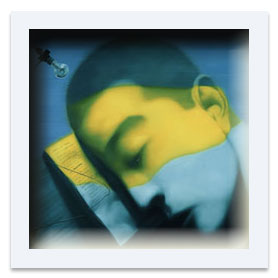
HONG KONG.- A Departure from Reality III: The Tender Truth features over 30 pieces of photographic artworks from 10 different series by Mainland Chinese artists Maleonn and Jiang Pengyi at both The Blindspot Gallery and Blindspot Annex in Hong Kong.

Maleonn is one of the most famous Chinese artists in conceptual photography. Ma’s photographs are filmed both on location and in studio, his previous professional work as a TV commercial director gives a staged quality to both his indoor and outdoor shots. And Ma often participates in his art by incorporating the use of his own facial masks and body parts. His staged photography represents a whimsical world, with total manipulation of space and matters. In one of the series What Love Is, the phantom objects include fire flames, butterflies, flowers, decorative lights and paper-cut figures on a miniature red-curtained stage. These make-shift elements seem to signify that ‘Love’ is like a dream/play.

Jiang Pengyi moved from his less developed hometown to the rapidly changing Beijing when he was a teenager, the cultural shock bred a deep sense of alienation in Jiang amid the bustling city. Excessive urbanization, demolition, redevelopments are recurrent themes in his art. In his series Unregistered City, Jiang uses digital manipulation to place new skyscrapers from real life among demolished sites of city expansion. Jiang intends to diminish the presence of human beings in his works, yet most of the images are filled with traces of human activity.

Read the full article


↑ Top